

News Summary
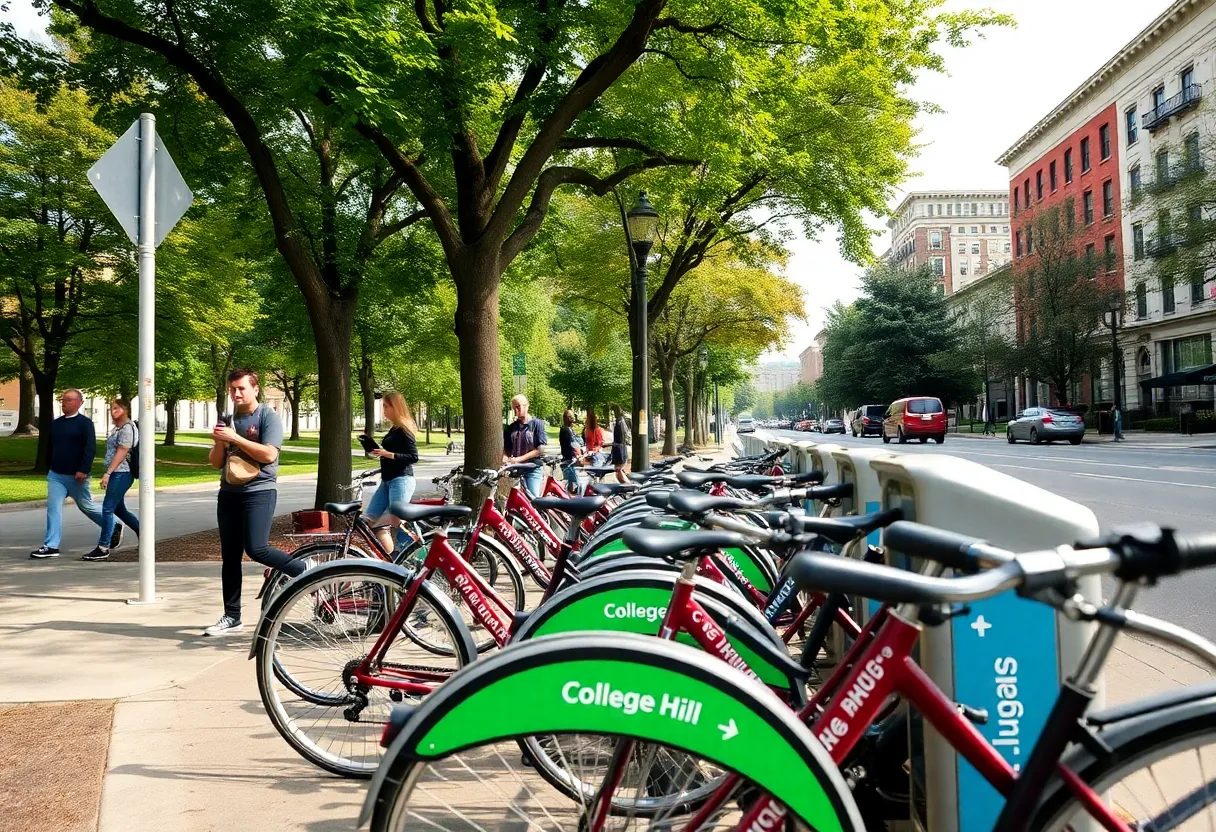
Providence is evaluating the establishment of a reliable bikesharing infrastructure to address transportation needs, especially for College Hill students. With other East Coast cities successfully implementing bikesharing systems, Providence aims to enhance accessibility while tackling traffic congestion and fostering a biking culture. Previous attempts at bikesharing revealed essential lessons about infrastructure requirements, pushing for community-supported solutions. The potential success of a bikesharing program may reshape local transportation dynamics.
Providence Explores Bikesharing Infrastructure to Meet Growing Demand on College Hill
Providence is considering the establishment of a reliable bikesharing infrastructure to cater to the growing need for affordable and convenient transportation, especially among students residing on College Hill. A recent challenge faced by Brown University students highlights the distance between classes, which can be too far to walk but too short for driving. In this context, the need for an improved bikesharing program has become evident.
Major East Coast cities, including Boston, New York City, and Washington, D.C., boast successful bikesharing programs that provide seamless bicycle access to residents and visitors alike. In contrast, Providence currently relies on Spin Scooters and a limited number of bikes, which lack the dependable infrastructure needed for a consistent bikesharing service.
Growing Population and Demand for Biking
Providence is home to over 1 million residents within its metro area and is witnessing an expansion in its bike infrastructure. According to the 2021 Green and Complete Streets Annual Report, the city has added 10.19 miles of shared streets, 1.36 miles of striped bike lanes, 2.3 miles of protected bike lanes, and 9.57 miles of shared-use paths. The success of a bikesharing program in the College Hill area could potentially serve as a model for scalability throughout the city, improving accessibility and encouraging a stronger biking culture.
Indications from traffic flow down Hope and Waterman Streets reveal a demonstrable demand for improved access to bicycles among residents. The implementation of a successful bikesharing program could significantly alleviate traffic congestion, enhance access to local businesses, and foster an overall positive community experience.
Learning from the Past
Providence’s previous experience with a bikesharing pilot program involving Jump Bikes serves as a valuable lesson. The initiative ultimately failed due to the absence of fixed docking stations and issues related to vandalism and bike misuse. This earlier attempt showcased the necessity for a docked, pedal-powered bikesharing system, similar to those successful in other cities. Many residents express a desire for easy access to bicycles without the need for ownership, making a docked system particularly appealing.
Despite some opposition to bikesharing, where individuals prefer car usage, research indicates that increased biking can lead to reduced vehicular traffic and improved parking conditions. Moreover, the Infrastructure plans indicate that the roads in Providence’s bike routes are expected to track an estimated 136,290 miles in alternative mobility trips by 2025. The reliability issues associated with Spin Scooters echo the challenges faced with Jump Bikes, demonstrating a clear need for a dependable option that aligns with community expectations.
Strategies for a Successful Bikesharing Program
Proposals surrounding a new bikesharing initiative underscore not only its economic feasibility but also the community’s demonstrated demand for improved cycling infrastructure. The focus on enhancing reliability and executing better management strategies is essential, drawing from previous experiences to ensure success this time around. The College Hill area possesses the cultural dynamics, evolving infrastructure, and community demand required for a vibrant and effective bikesharing program.
In summary, the implementation of a reliable bikesharing system stands as a potential solution to transportation challenges faced by residents and students in Providence. With successful examples from other cities to guide the way, this initiative could reshape the biking landscape and offer a transformative alternative to current transportation methods.
Deeper Dive: News & Info About This Topic
HERE Resources
Additional Resources
- Boston Globe: Commentary on RI Bikeshare Transportation
- Providence Journal: Electric Bike Sharing System in Downtown Providence
- Providence Journal: Rentable Smartbikes Coming Soon to Providence
- Mobile Marketing Magazine: Uber Eyes European Launch of Electric Bike Sharing Service
- Momentum Magazine: Changing Streets One Bikeshare Station at a Time
- Wikipedia: Bikesharing
- Google Search: Bikesharing in Providence
- Google Scholar: Bikesharing Programs
- Encyclopedia Britannica: Bikesharing
- Google News: Bikesharing News


Author: STAFF HERE PROVIDENCE WRITER
The PROVIDENCE STAFF WRITER represents the experienced team at HEREProvidence.com, your go-to source for actionable local news and information in Providence, Providence County, and beyond. Specializing in "news you can use," we cover essential topics like product reviews for personal and business needs, local business directories, politics, real estate trends, neighborhood insights, and state news affecting the area—with deep expertise drawn from years of dedicated reporting and strong community input, including local press releases and business updates. We deliver top reporting on high-value events such as WaterFire, Rhode Island International Film Festival, and Rhode Island Comic Con. Our coverage extends to key organizations like the Greater Providence Chamber of Commerce and Providence Warwick Convention & Visitors Bureau, plus leading businesses in finance and manufacturing that power the local economy such as Citizens Financial Group and Textron. As part of the broader HERE network, we provide comprehensive, credible insights into Rhode Island's dynamic landscape.